Year of the Horse Exhibit Artists
(click on an artist for more information)
Nina Aronson
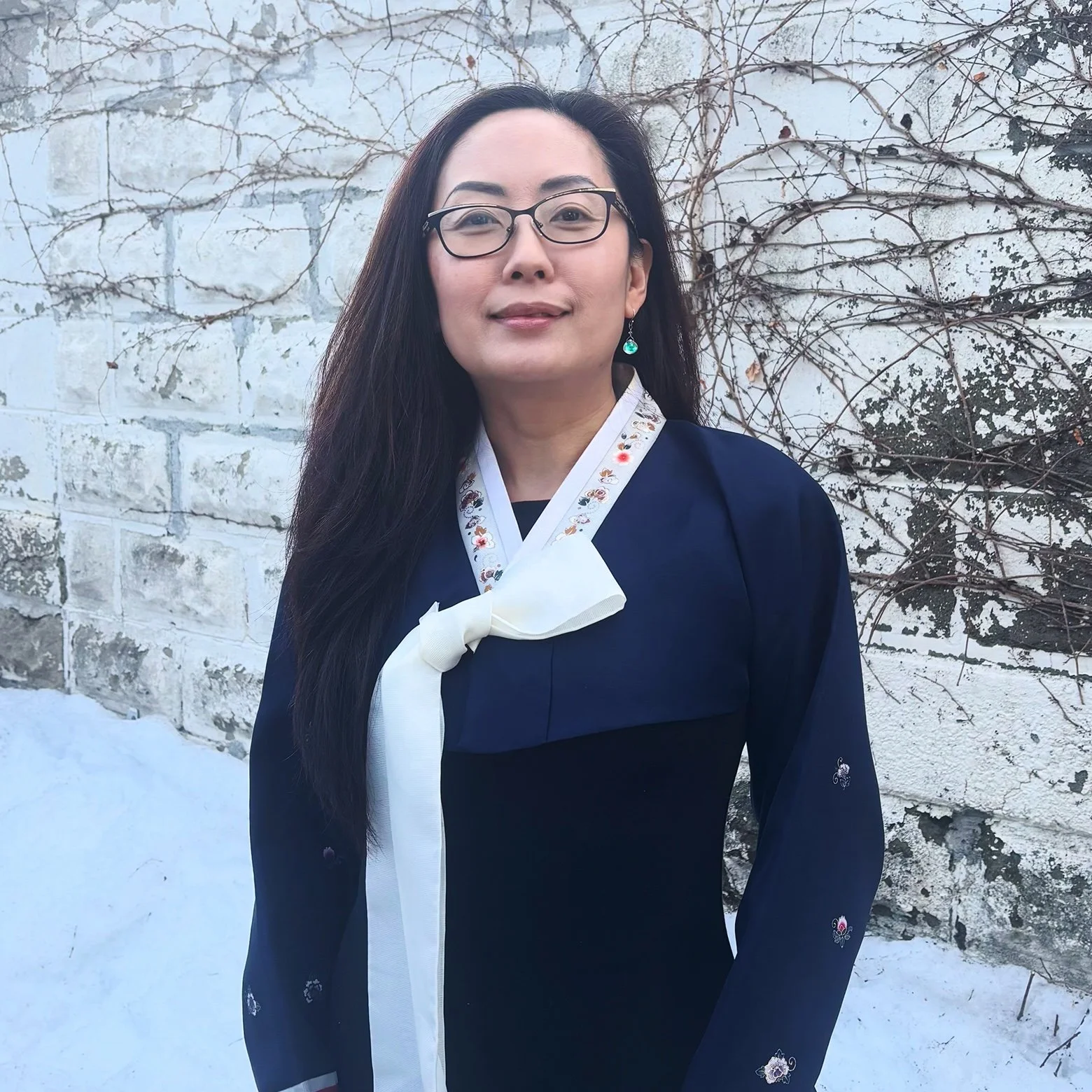
Nina Aronson is originally from California. She now resides in Newton, MA and joined the studios at Gateway Arts in 2017. Aronson’s work is diverse, and she enjoys utilizing a variety of media, both 2- and 3-dimensional.
Vinfen’s Gateway Arts is an internationally acclaimed studio art center, store, and gallery providing professional supports and representation to adult artists with disabilities. Nina Aronson is one of nearly 100 artists supported by Gateway Arts.
Andre Lee Bassuet
The Year of the Horse in 2026 is predicted to be a dynamic and inspiring period influenced by the Fire Horse, characterized by passion, innovation, and a drive for success. I made a flag book of a horse galloping through rings of fire ablaze to express that we have to continue hurtling through obstacles with burning passion and quick action. This year is about taking action, intense activity, great energy, and resilience.
Image credit: Kiyomi Yatsuhashi
Anneke Chan
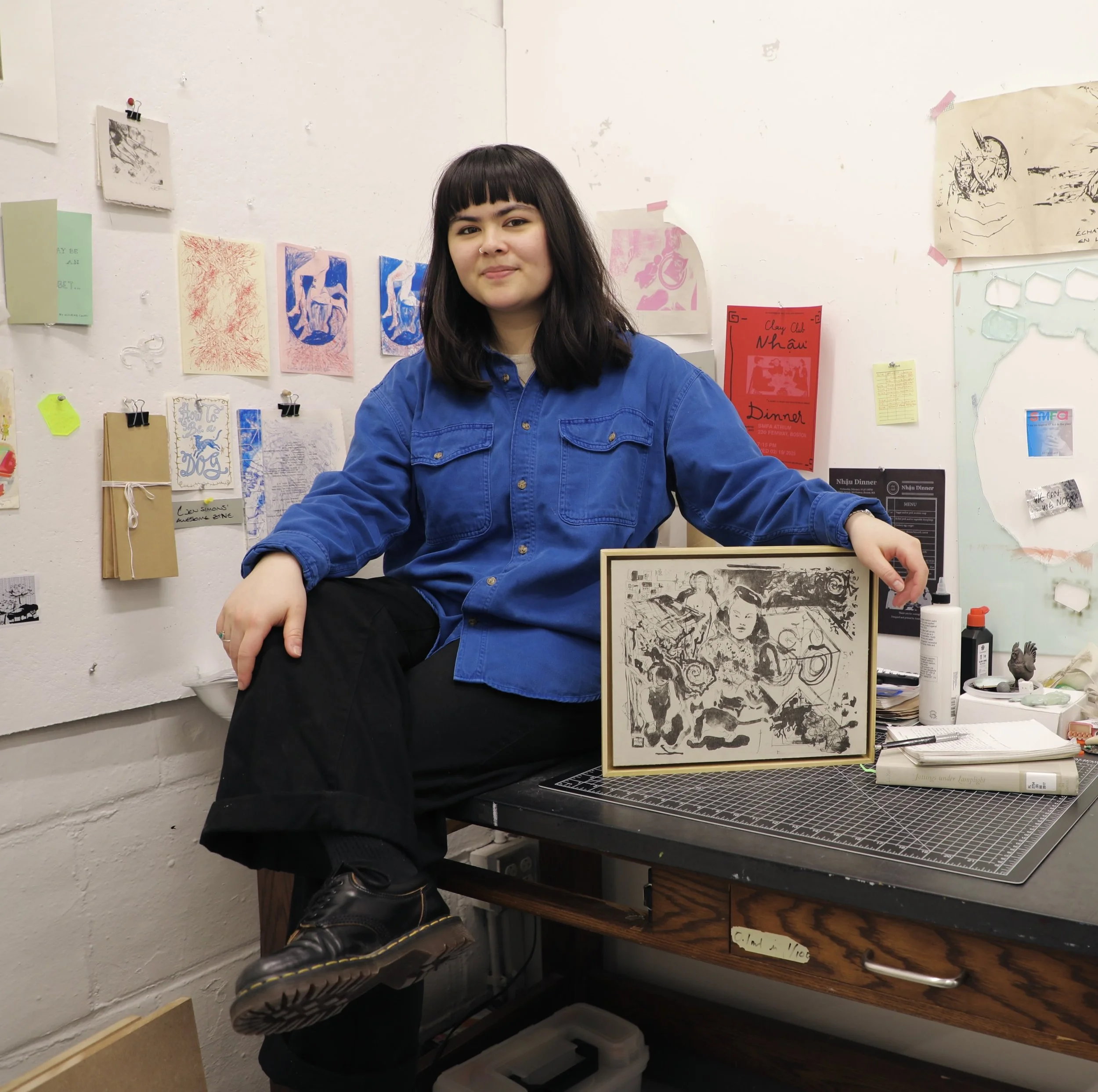
"In a Stone Den..." is inspired by three East Asian sculptures in the Harvard Art Museum's collections, as well as the poem "Lion-Eating Poet in a Stone Den" by Hu Mingle. This Chinese poem from 1916, composed entirely of homophones, tells the story of a man with such a voracious appetite that he was tricked into eating stone tomb statuary, like the one included in my design. The Tang dynasty horse figurine intrigued me in particular as both an enduring symbol of the Chinese zodiac and a locally based artifact with renewed significance this year of the horse.
Image credit: Hami Trinh
IJ Chan
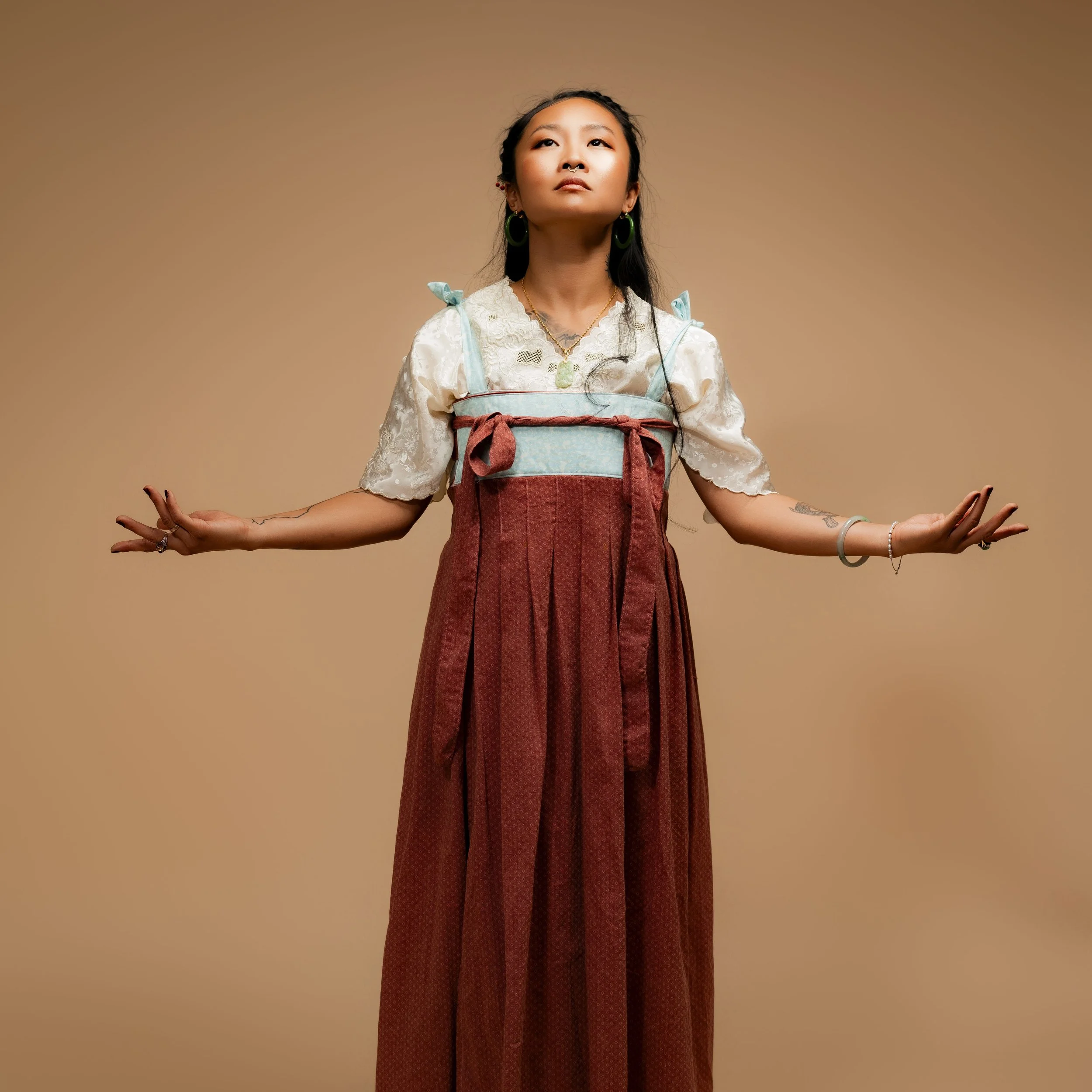
IJ Chan (陳加恩) / SKETCHMONCHAN is a dancer, educator, graphic designer, visual artist, and clothing designer from Boston, MA. She has dedicated her life to training and performing intensively in multiple dance genres, as well as bringing quality arts instruction to inner-city youth in Boston. IJ is a proud Chinese-American with roots in Hong Kong and Southern China and is interested in exploring the Asian-American narrative in her own art.
Image credit: Najee Brown
Tate Won Chen
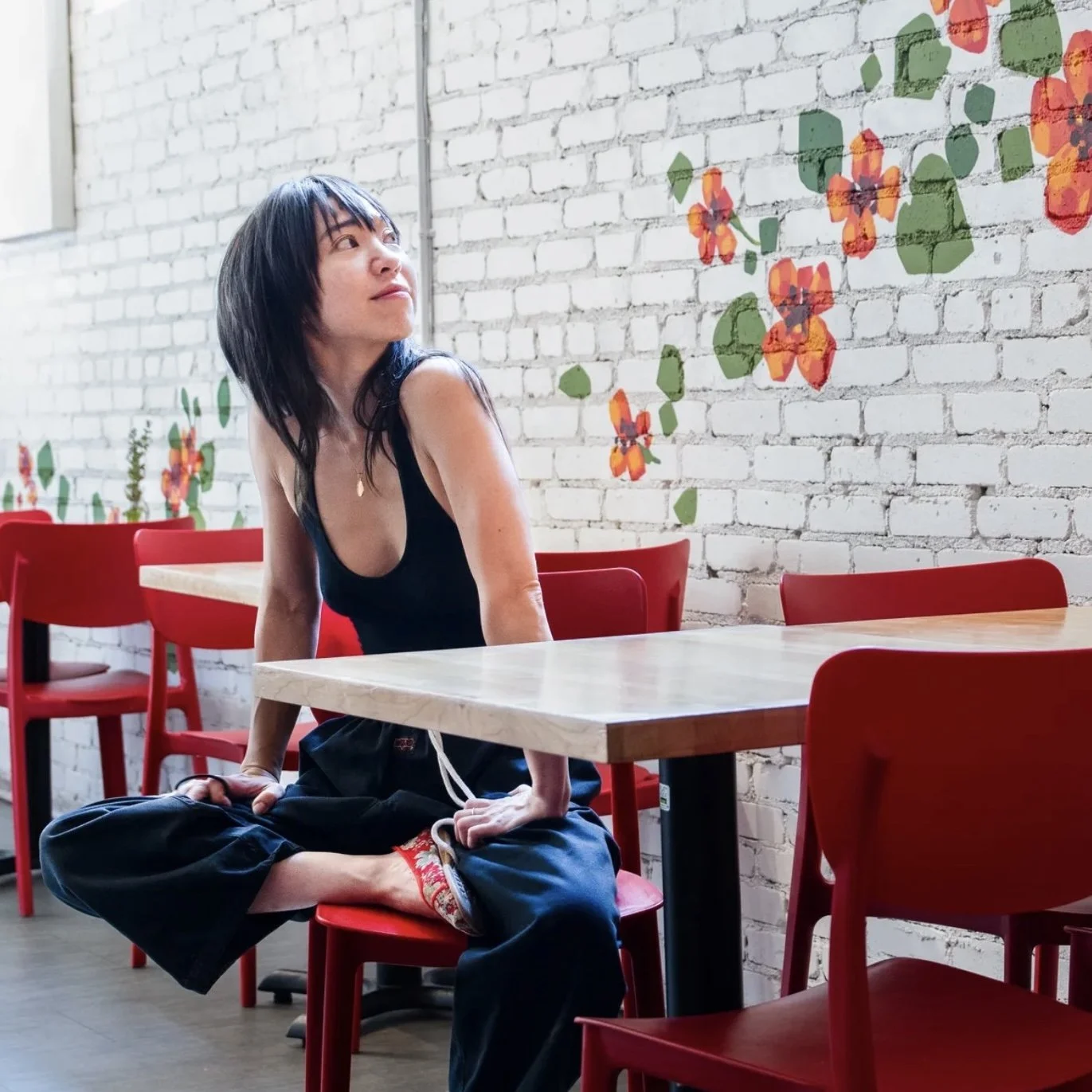
An explosive burst of fiery flowers blooms in defiant abundance- each petal a flare of motion and heat. Dedicated to the Year of the Fire Horse, this painting honors unrestrained energy, passion in motion, and the courage to burn brightly without apology.
Image credit: Dana Tarr
Madeleine Conover
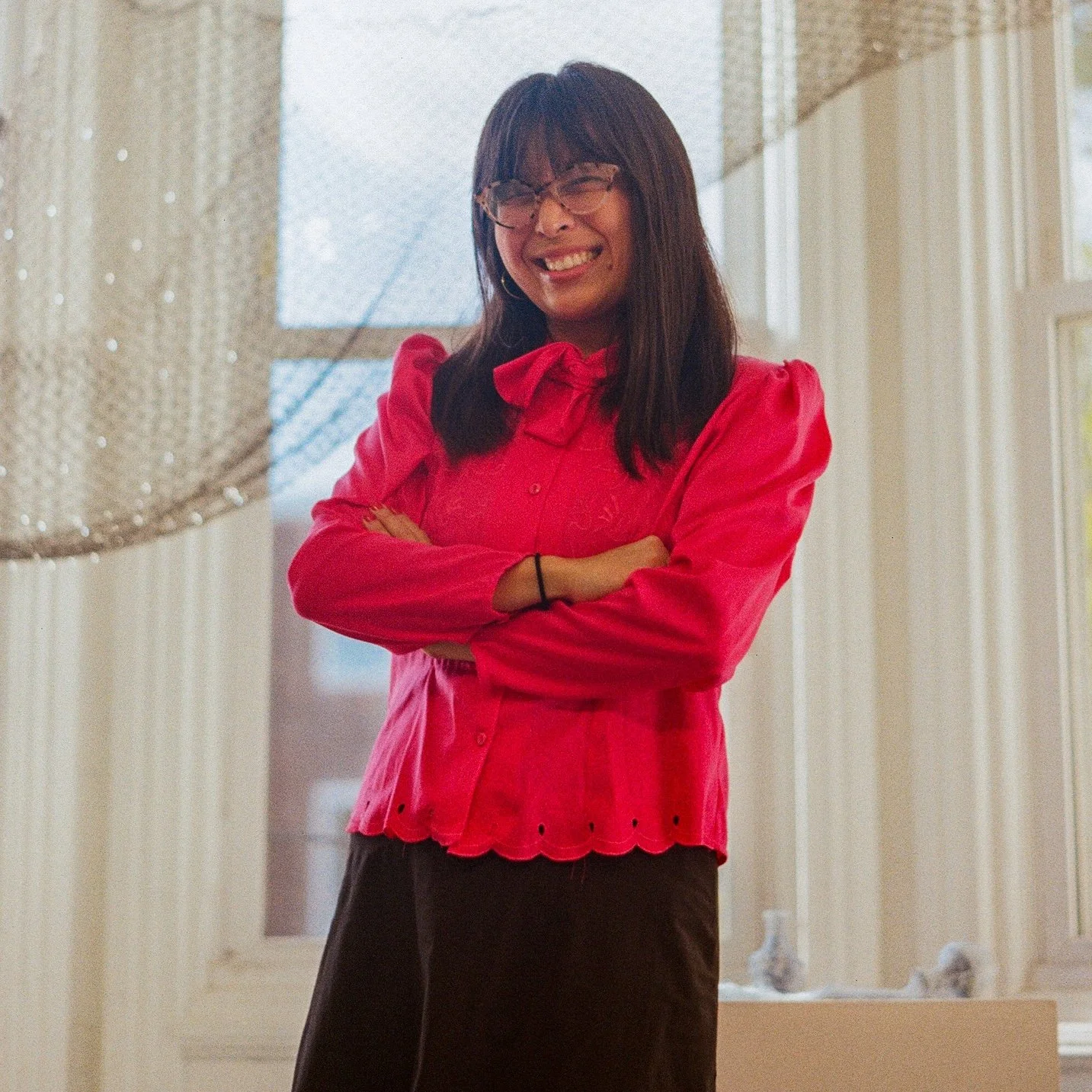
Madeleine Conover is a Chinese American adoptee and artist. Her images and sculptures explore her ideas of Asian American diaspora and her adoption due to China’s former one-child policy. Her recent work focuses on the subsequent discovery of her biological family and community building with adoptees.
Conover was raised in Washington, DC by a single mother. She received an MFA in Printmaking from the Tyler School of Art & Architecture and a BA in Studio Art and Sustainable Food & Farming from the University of Massachusetts Amherst. Her work has been included in solo and group exhibitions in Philadelphia, Western Massachusetts, New York City, and the Bay Area. She has participated in artist residency programs at Ceramics School, Directangle Press, Pyramid Atlantic Art Institute, Second State Press, Kala Art Institute, and Wassaic Project.
Based in Philadelphia, she teaches printmaking and ceramics classes. She also recently started her own small risograph publishing press, Mad Dog Studio.
Image credit: Drew Johnson
Emma Tung Corcoran

Emma Tung is a queer and disabled AAPI illustrator in Somerville MA whose work celebrates nature, community, and healing through joyful, plant-inspired imagery. With a background in plant molecular biology, her artistic practice draws on a decade of scientific curiosity to explore identity through her relationship with fruits and flowers.
Image credit: Cynthia Tung Corcoran
Jennifer Duan
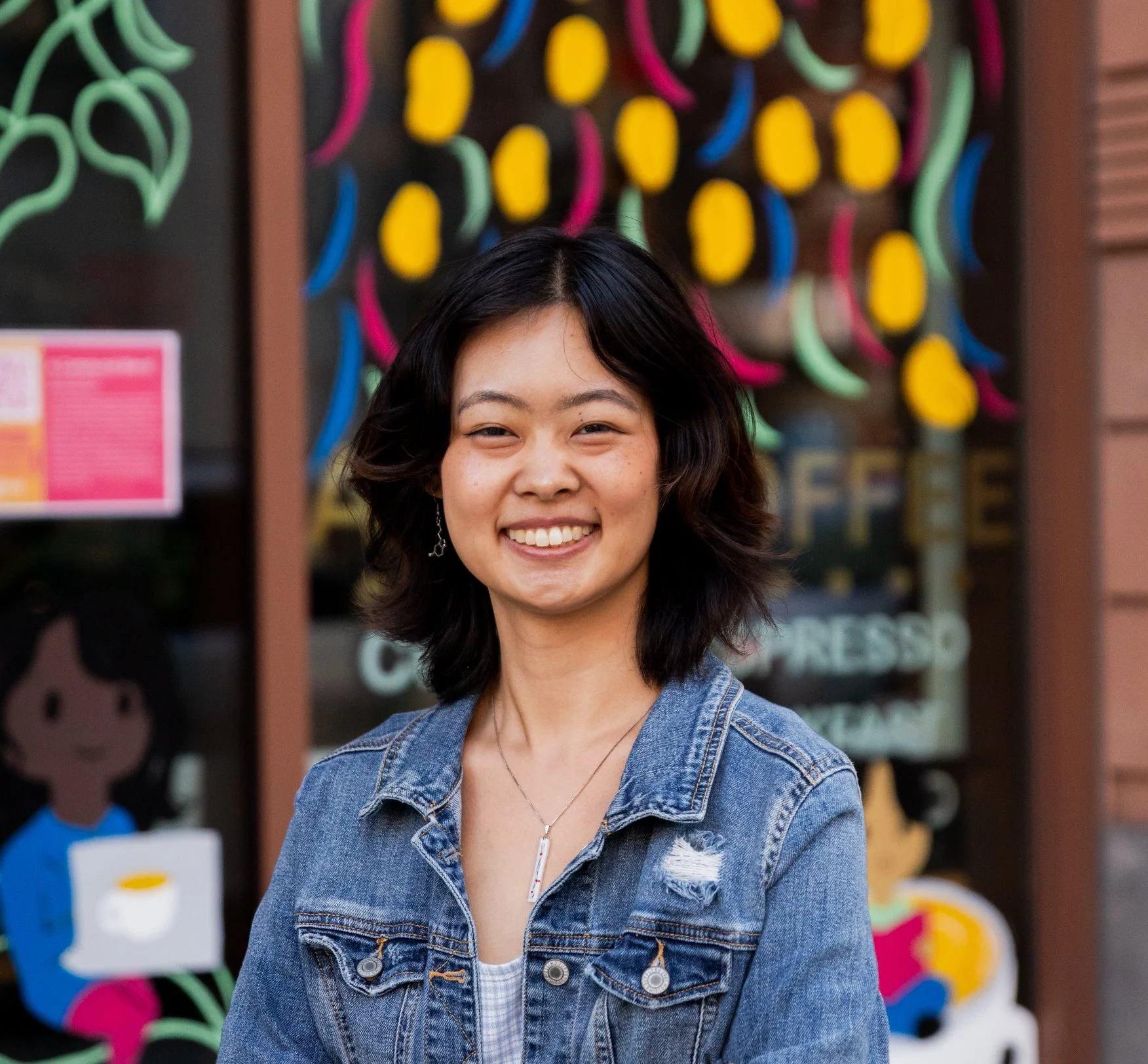
Jennifer (Jenn) Duan is a Chinese American multidisciplinary artist based in Boston, MA. Her artistic practice is rooted in channeling creativity a vessel to encourage the exploration of complex emotions, celebrate the simple joys of living, and ignite a spark for building community. They primarily works in digital art, acrylic, and printmaking. In her free time, Jennifer can be found making zines, traveling for inspiration, or simply peeling a tangerine.
Image credit: Mel Taing
Eva Lin Fahey 张雯林
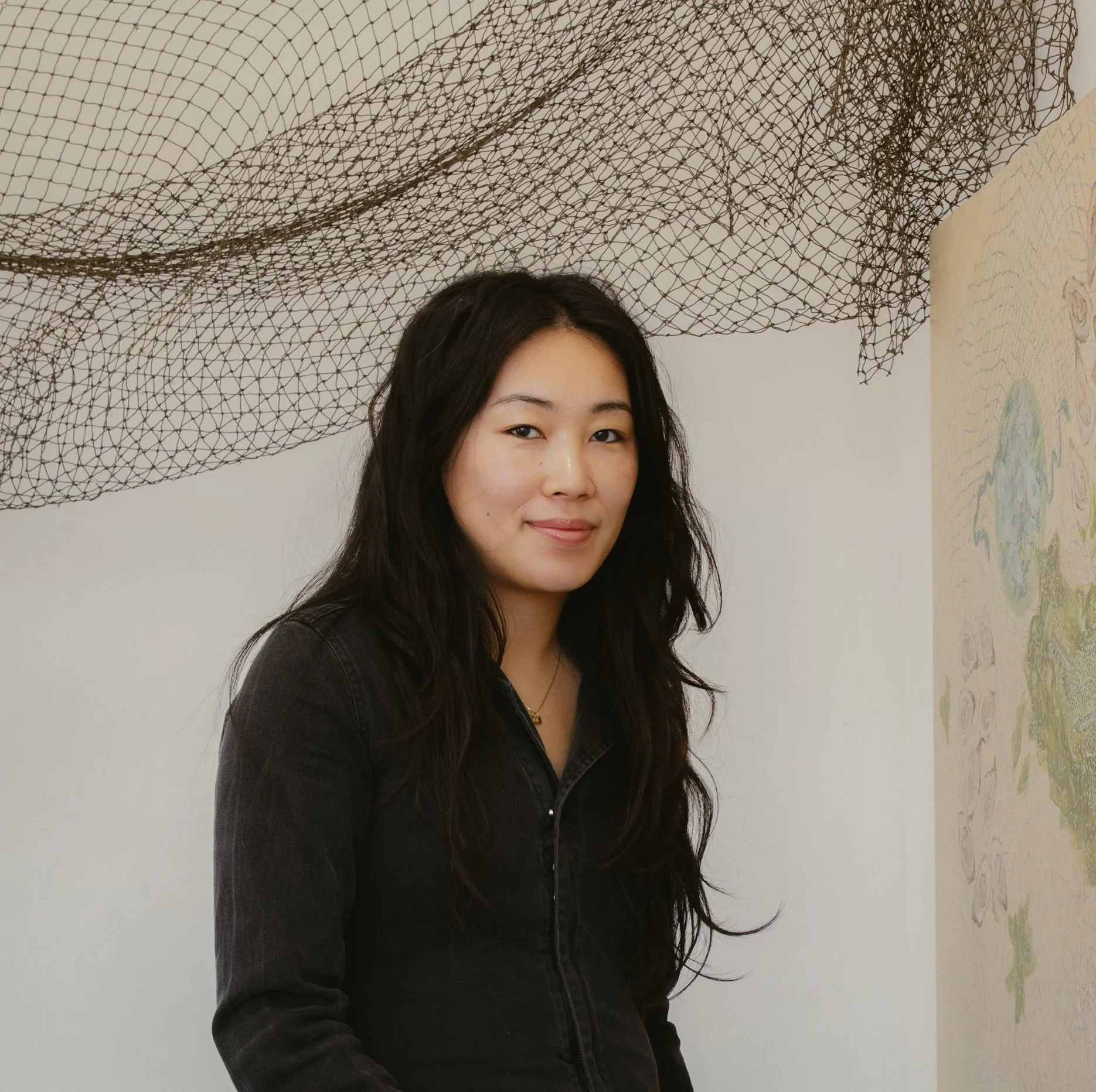
Jade Horse considers the zodiac horse as a guardian figure—an emblem of strength, momentum, and passage through unseen thresholds. This work continues my exploration of displacement and diasporic longing through speculative mythology. My visual language shapeshifts like myths that transform across time through repetition and geographic crossing. These imagined narratives function as spaces to connect beyond the restrictions of memory and time, traversing my own “lexical gaps”. My work begins with a violent wiping of the slate—biologically, phonetically, and geographically—and imagines continuity through cosmology and shared longings in order to construct belonging where inherited narratives fall short.
Image credit: Artist
Nova Hill
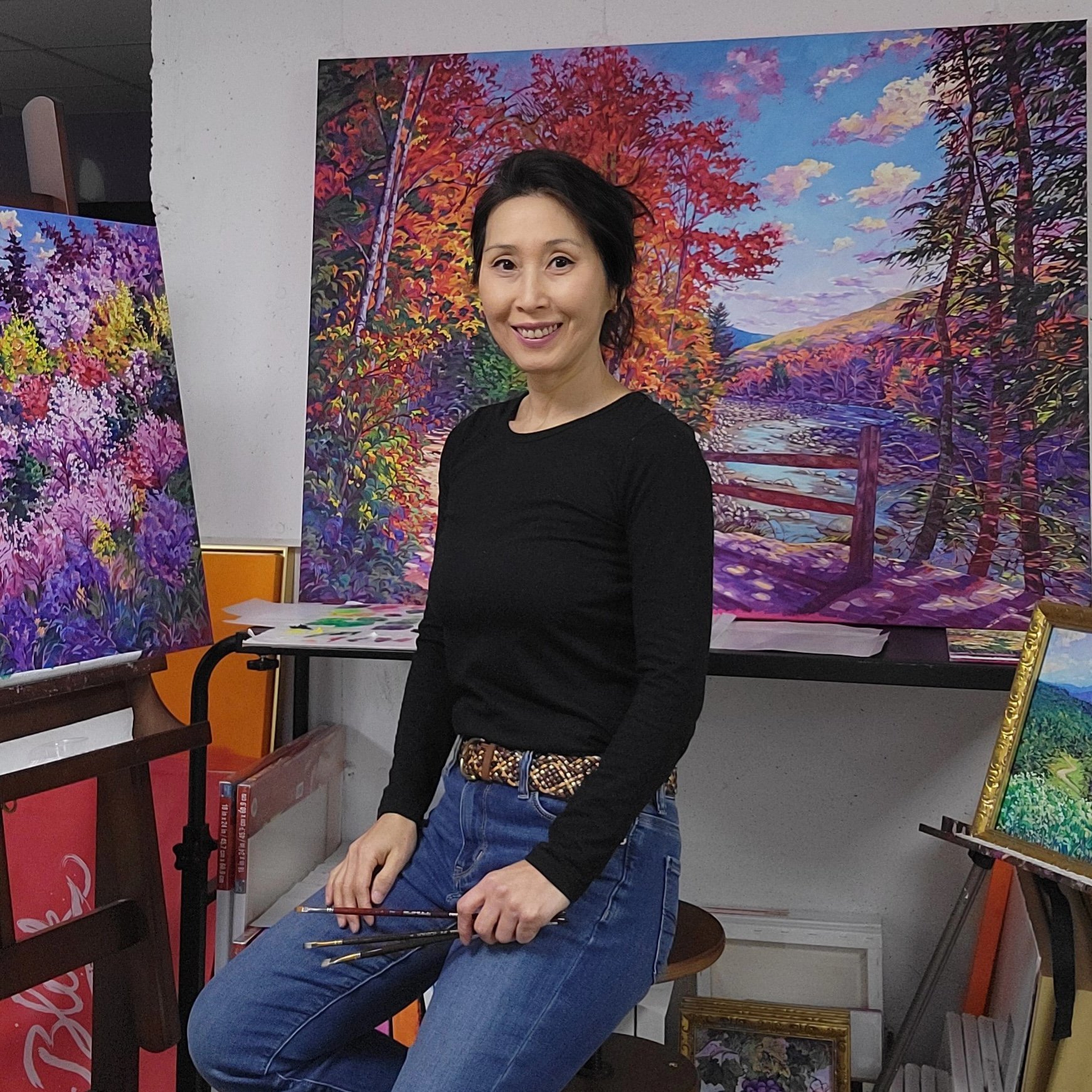
Nova Hill is a New England based painter who specialized in impressionistic and expressionistic landscape oil painting. She is a self-taught artist who consistently nurtured her passion for art since childhood, using her free time to experiment with various painting techniques and styles, developing her own unique artistic expression.
Image credit: Artist
Michiko Imai
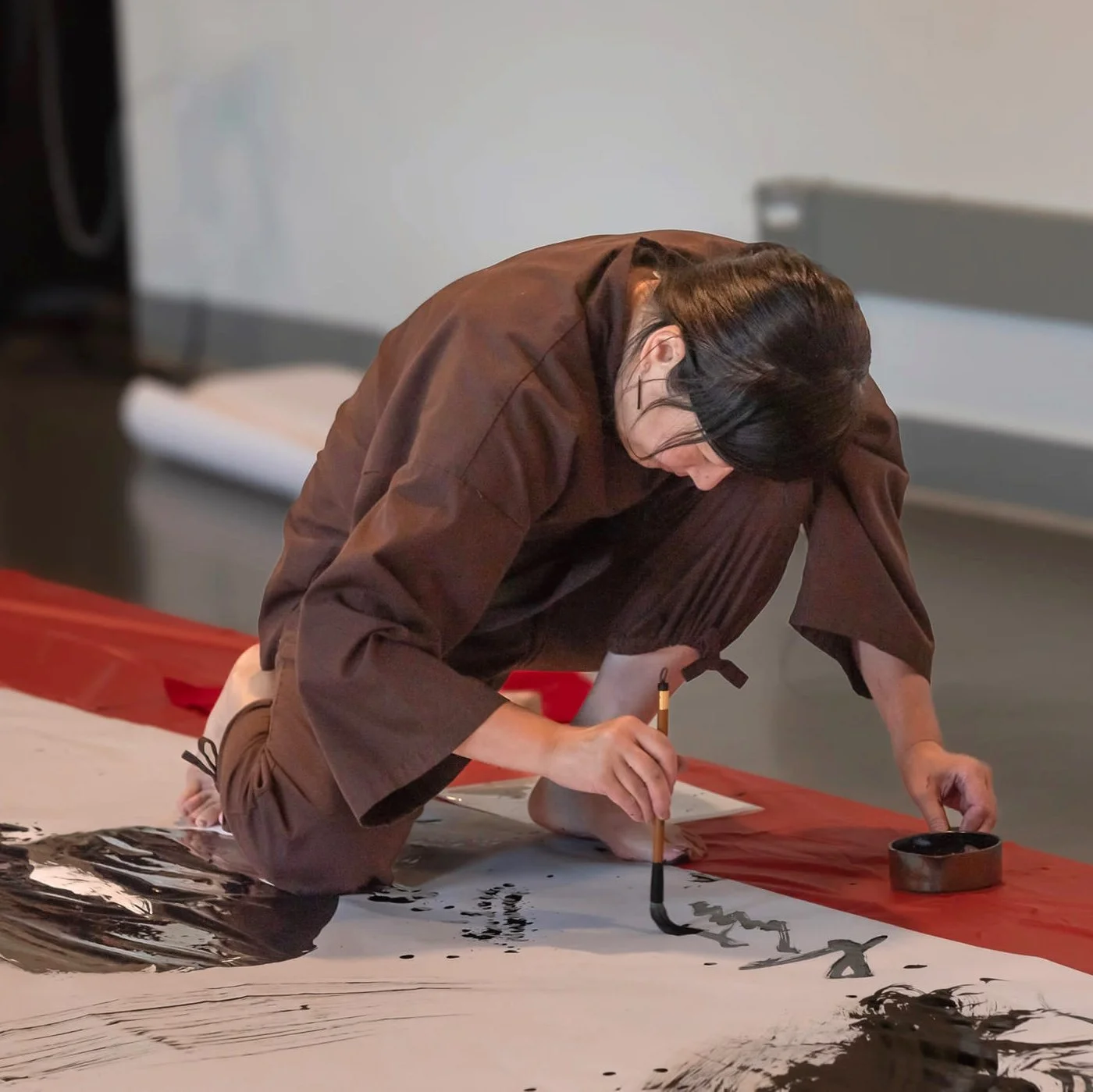
Michiko Imai began studying calligraphy in Japan with a focusing on Chinese characters. Her repertoire also includes Japanese kana syllables written on decorated paper, a tradition dating back to the Heian period (794–1185). An expert in scroll mounting, she views the borders around the work as integral to the overall composition. In this piece, she draws on calligraphic techniques to express a simple yet dynamic horse. Michiko was a featured artist in Pao Arts Center's 2024 exhibition, The Inventive Brush: Calligraphic Echoes from China, Japan, and Korea.
Image credit: Anna Belkina
Xiang Li
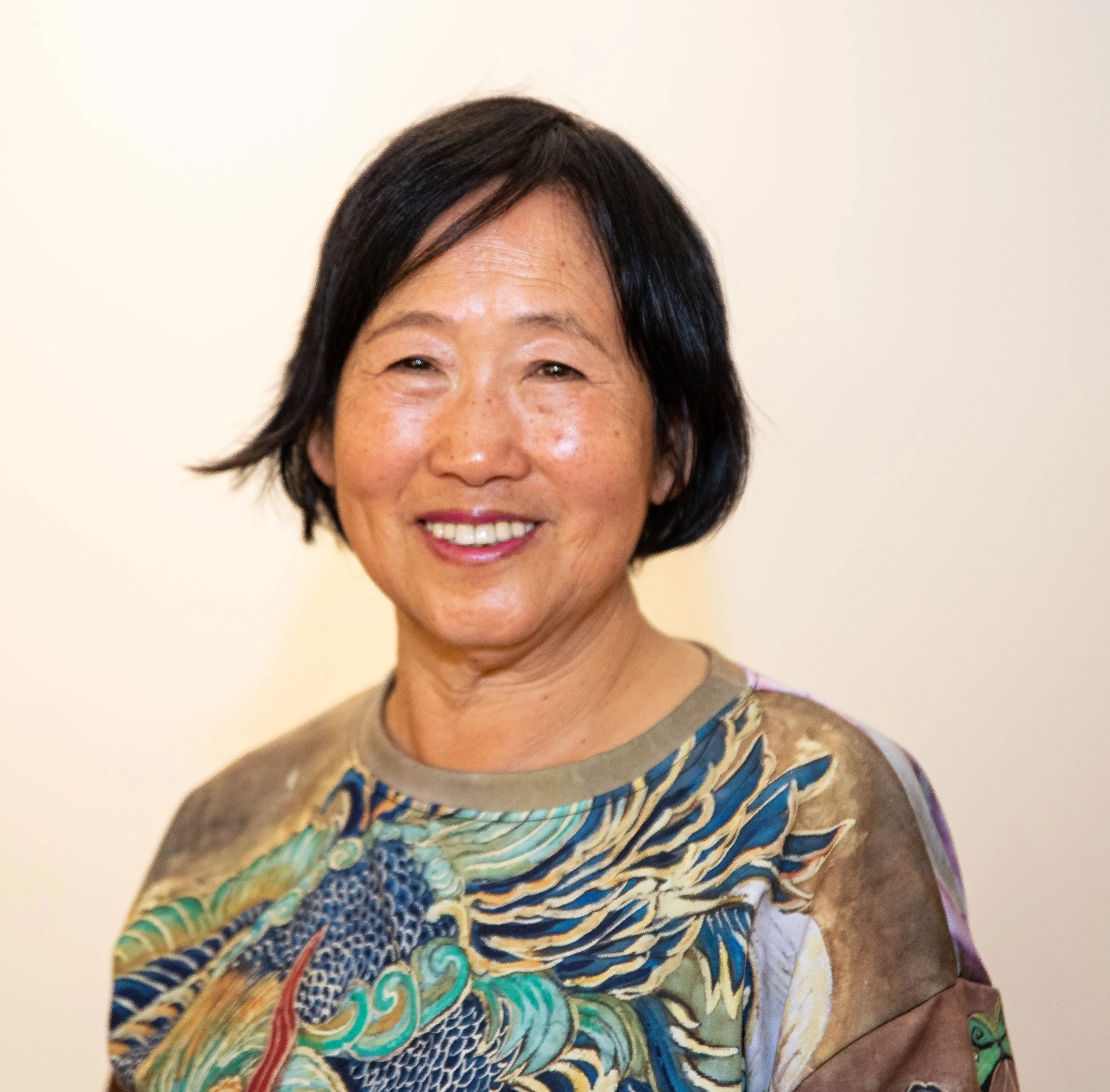
Xiang Li is an internationally acclaimed artist who specialized in the reproduction and restoration of ancient Chinese paintings at the Forbidden City of Beijing, China, where she worked as a Master Artist for 37 years. Li’s most recent collection, Chinese Empresses, features over 200 empresses painted with gemstone watercolors on silk and has been showcased at the Harvard Museums, Museum of Fine Arts Boston, Worcester Art Museum, JMAC, Cambridge Library, Tower Hill Botanical Garden among others.
Image credit: Artist
Zhonghe Elena Li

Zhonghe (Elena) Li is a location-based, participatory artist whose work explores the interdependence between human well-being and the natural world. Influenced by Taoist philosophy, she creates hands-on art experiences in community settings that reconnect youth and families with land and waterways. Through papercutting, lantern-building, and collaborative installations, she transforms ecological observation into embodied creative practice. She believes creativity and spirituality arise from direct engagement with nature, and that nurturing this relationship supports both personal resilience and ecological balance, fostering belonging between people, place, and one another.
Image credit: Artist
Katelyn Lipton
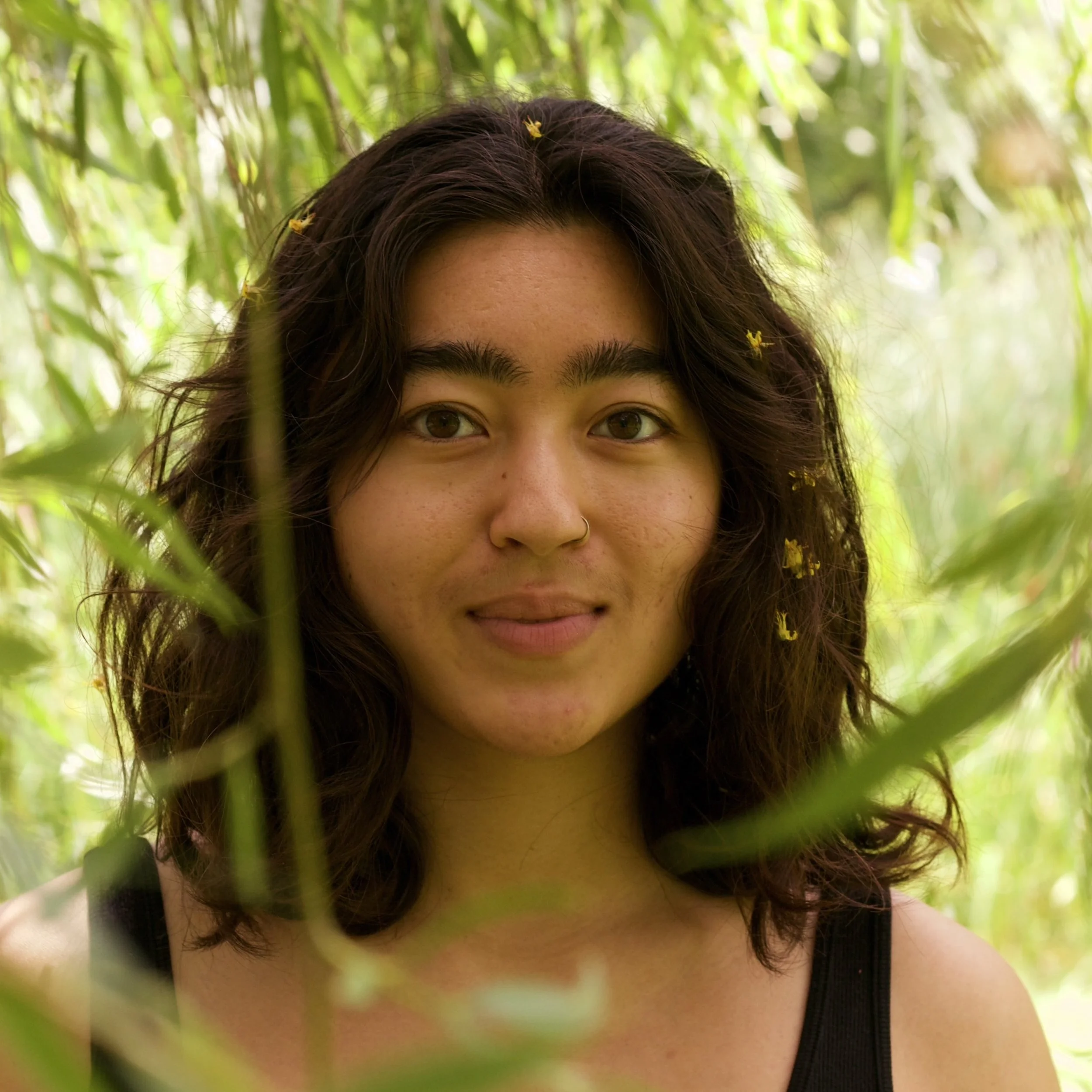
Katelyn Lipton is a Korean American artist from the Hudson Valley of New York, based in Providence, Rhode Island. Her work explores diasporic Korean identity, ancestral craft, and relationship to the land through printmaking, illustration, and public art. Weaving together plant studies and Korean folklore, she tells stories of resilience and cultivates feelings of belonging in her poetic zines. Building a social practice, Katelyn creates collaborative public art projects, illustrations, and printed work in tandem with gardening and teaching to further environmental justice and food sovereignty. Rooted in community, her work connects people to the land, each other, and themselves.
Image credit: Andrea Simms
Erica Meimei
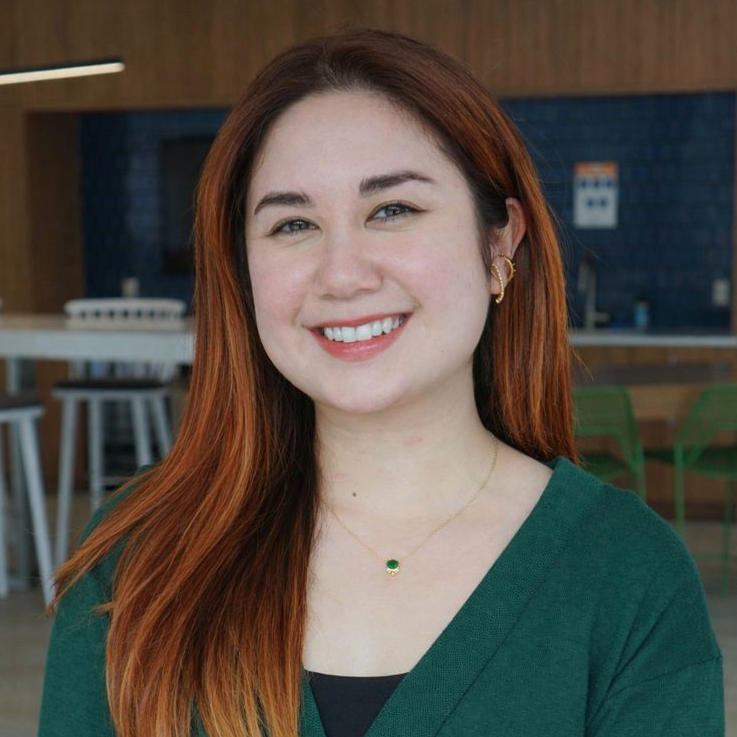
The Lion Dance was always my favorite part of Lunar New Year celebrations! I loved the way the dancers would shift in and out of focus, moving boldly and confidently to the beat of the drum while wearing these intricately crafted traditional garments. They were also my mom's favorite part of Chinese New Year, as they reminded her of the celebrations in her home city of Hong Kong. I wanted to paint two lion dancers dancing boldly, blurring in and out of focus, as if from a distant memory. I chose oil pastels because they capture the colorful essence of the dancers while letting me blur and blend aspects of the piece, preserving a tradition that connects generations.
Image credit: Evan Le
Chandarith Moeun
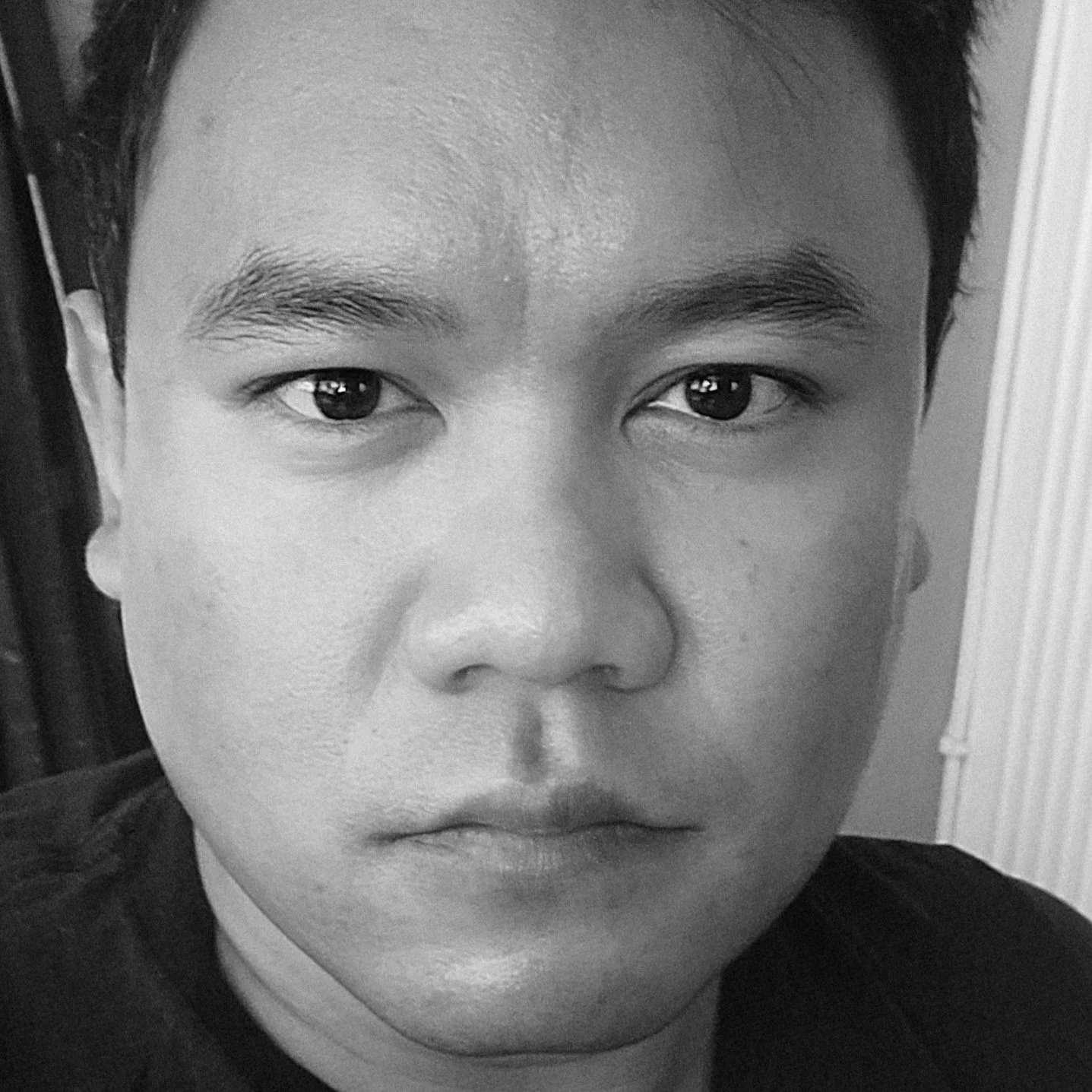
Chandarith Moeun is a Cambodian-American Visual Artist based in Allston, MA. He has a background in animation, and primarily uses illustration and comics for storytelling. His work usually includes themes of identity, grief, and humor- and has been featured in the Boston Asian American Film Festival, the City of Lowell, and throughout schools in Maine.
Image credit: Artist
Chelsea Phan
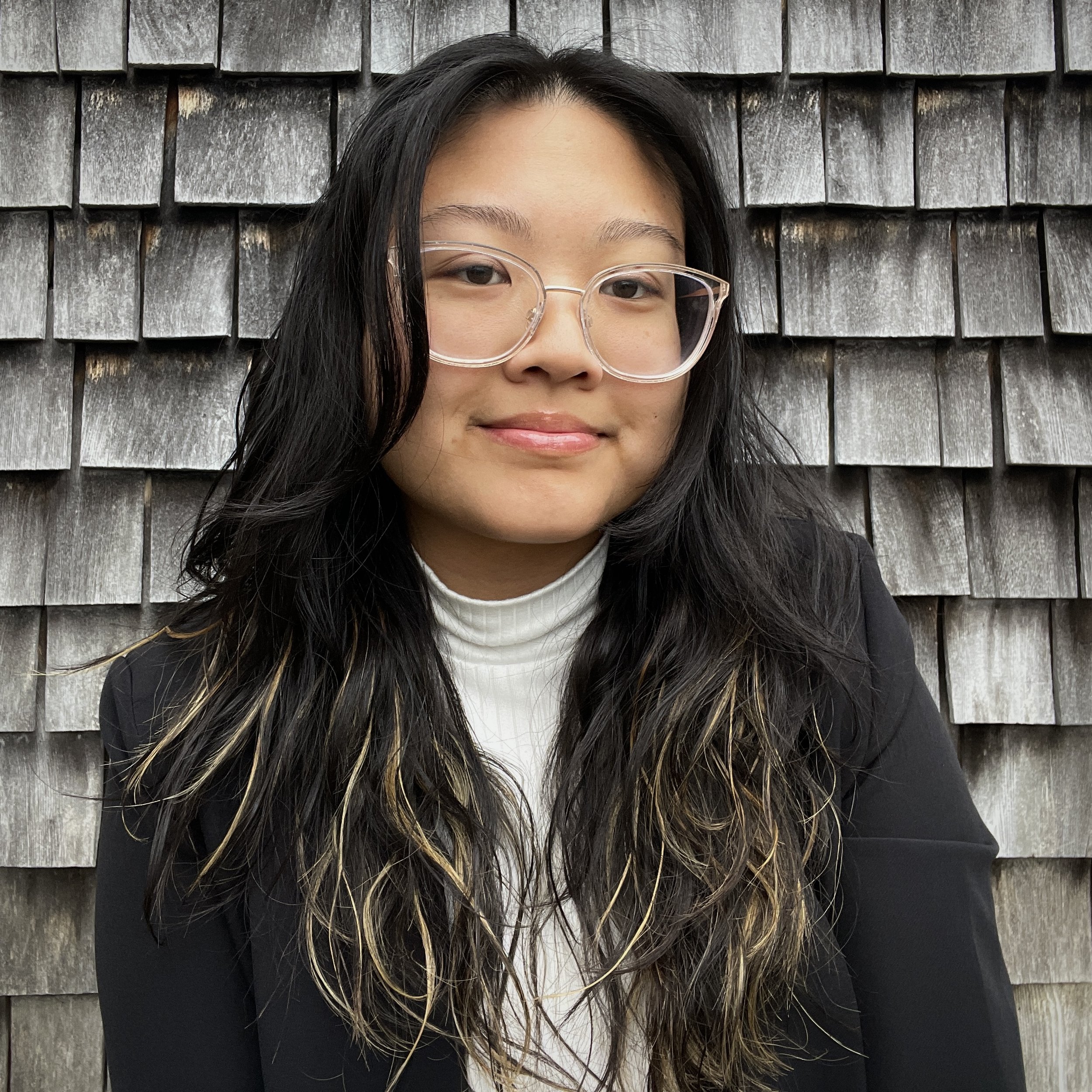
This drawing shows the Vietnamese Lunar New Year traditions I grew up with. My parents taught me how to request the red envelope in Vietnamese. Food was a big staple for good luck during the celebration, alongside the decor and lion dance, with the dancers wearing traditional ao dài attire.
Image credit: Artist
ponnapa prakkamakul
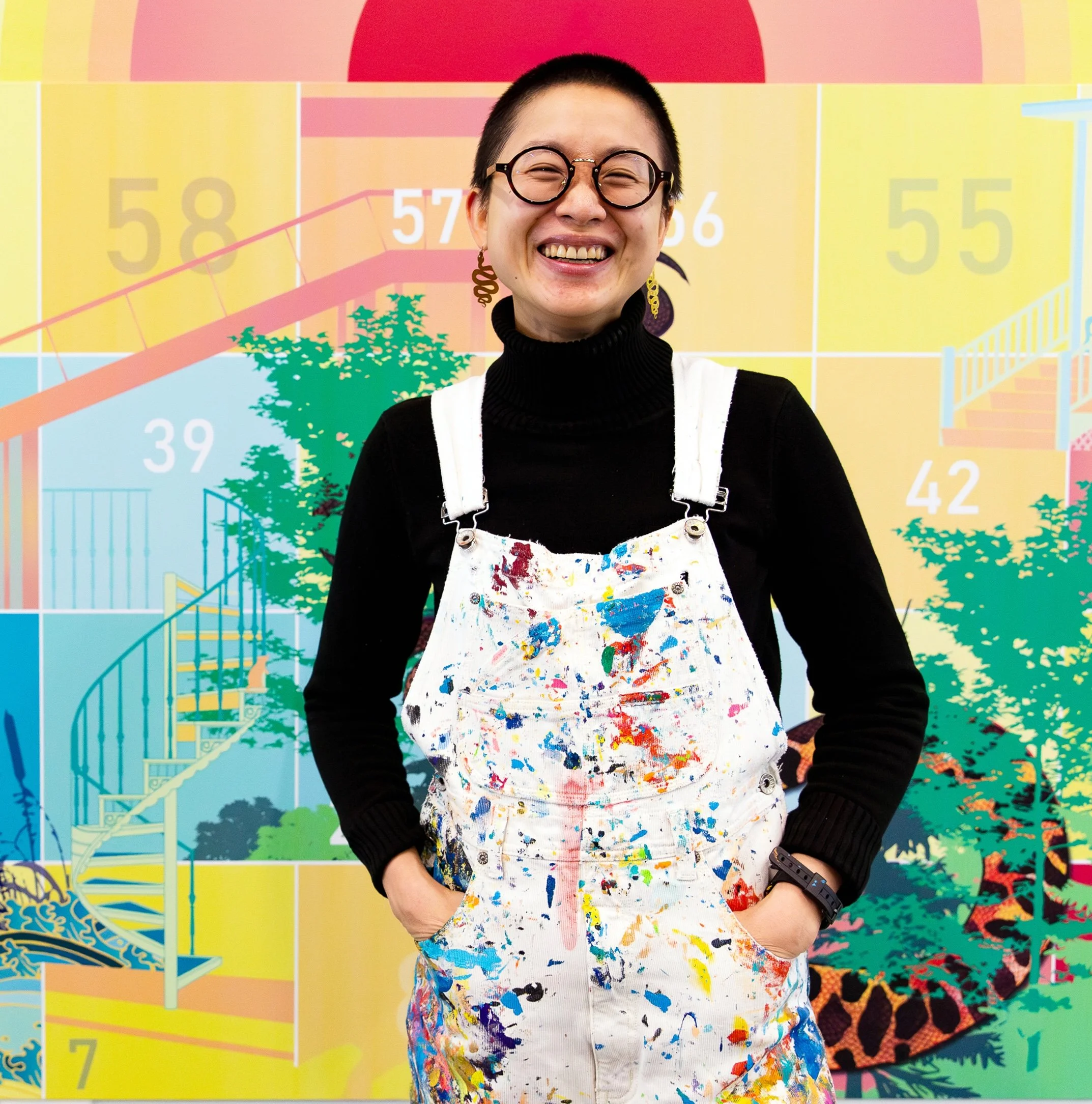
ponnapa prakkamakul พรนภา ปรักกมกุล 陳可意 (she/her) is a multidisciplinary artist and landscape architect based in Massachusetts. As a third-generation, ethnically Chinese born in Thailand, relocated to Hong Kong then the United States, ponnapa creates place-specific installations that explore the relationship between people and their environment. Inspired by landscape and people at the site, her work tells stories of the place and expresses voices from people in those locations, aiming to create a sense of place and belonging. ponnapa holds a Master’s degree in Landscape Architecture with honors from the Rhode Island School of Design.
Image credit: Lauren Miller
Aree Tam
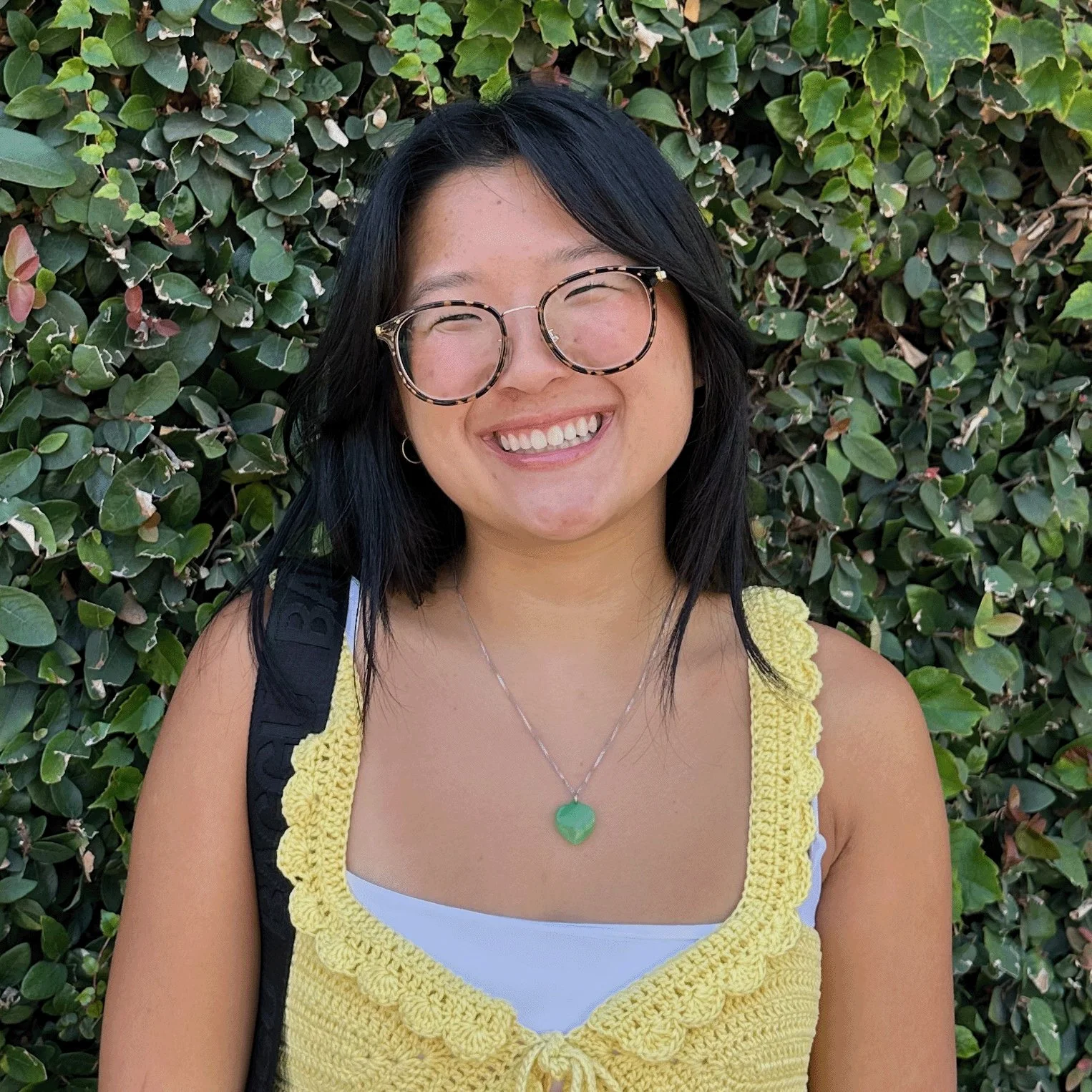
Aree Tam (she/her) is a Boston-based Asian American artist and designer who blends digital and analog processes. While her primary focus is graphic design, working mainly with typography and printed media, she enjoys exploring a range of techniques and mediums in her creative practice. Her work is rooted in themes of nostalgia, joy, and her Asian American identity, exploring the ongoing dialogue between memory and making.
Image credit: Artist
Tenest Tang
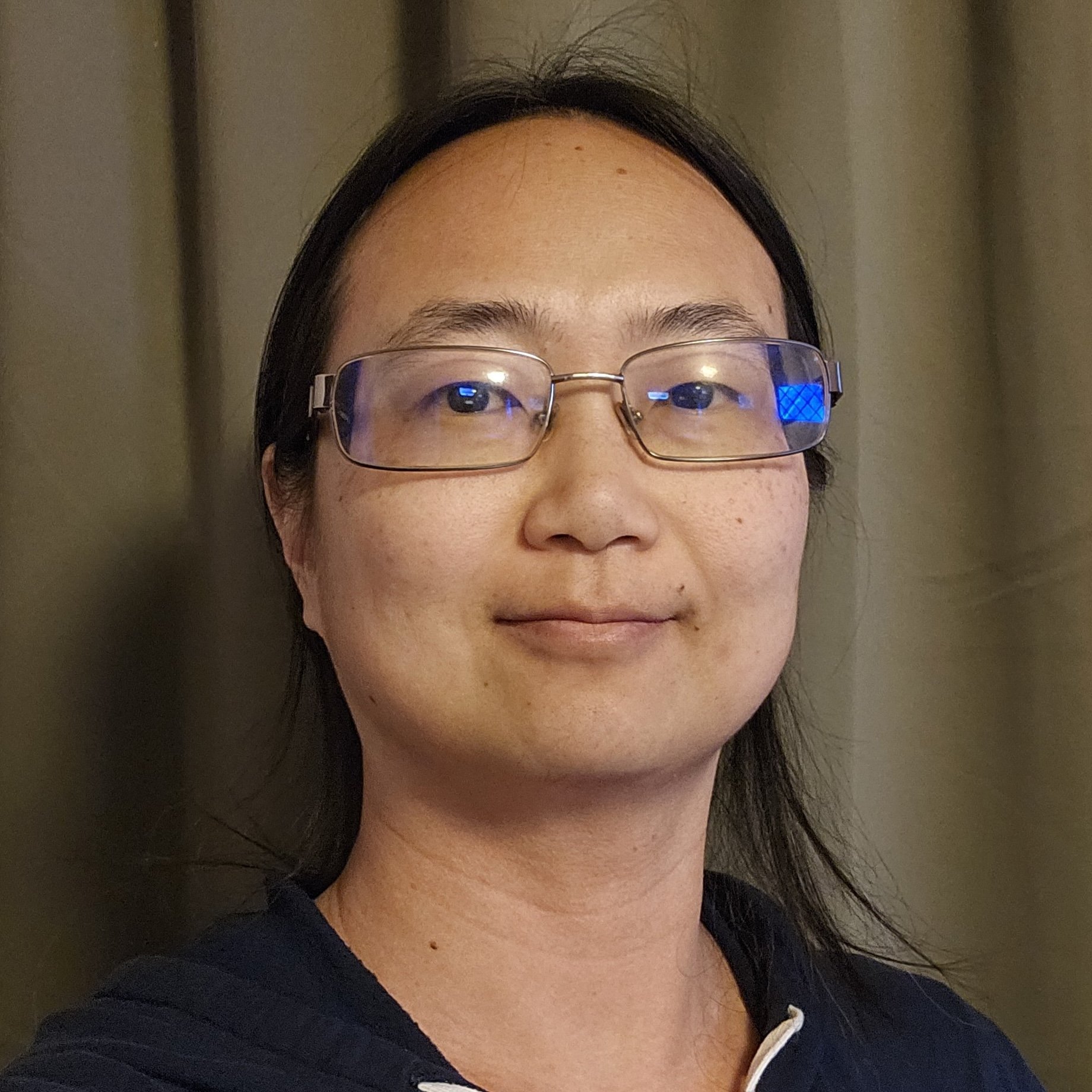
Tenest Tang is a queer trans Chinese American. Immigrating to the US at the age of 8, Tenest struggled to balance their birth culture and the new environment. After many years, Tenest is pleased to return to their roots, continuing their study of Chinese brush painting which they had begun in China as a child.
Image credit: Artist
Kalinda Tran
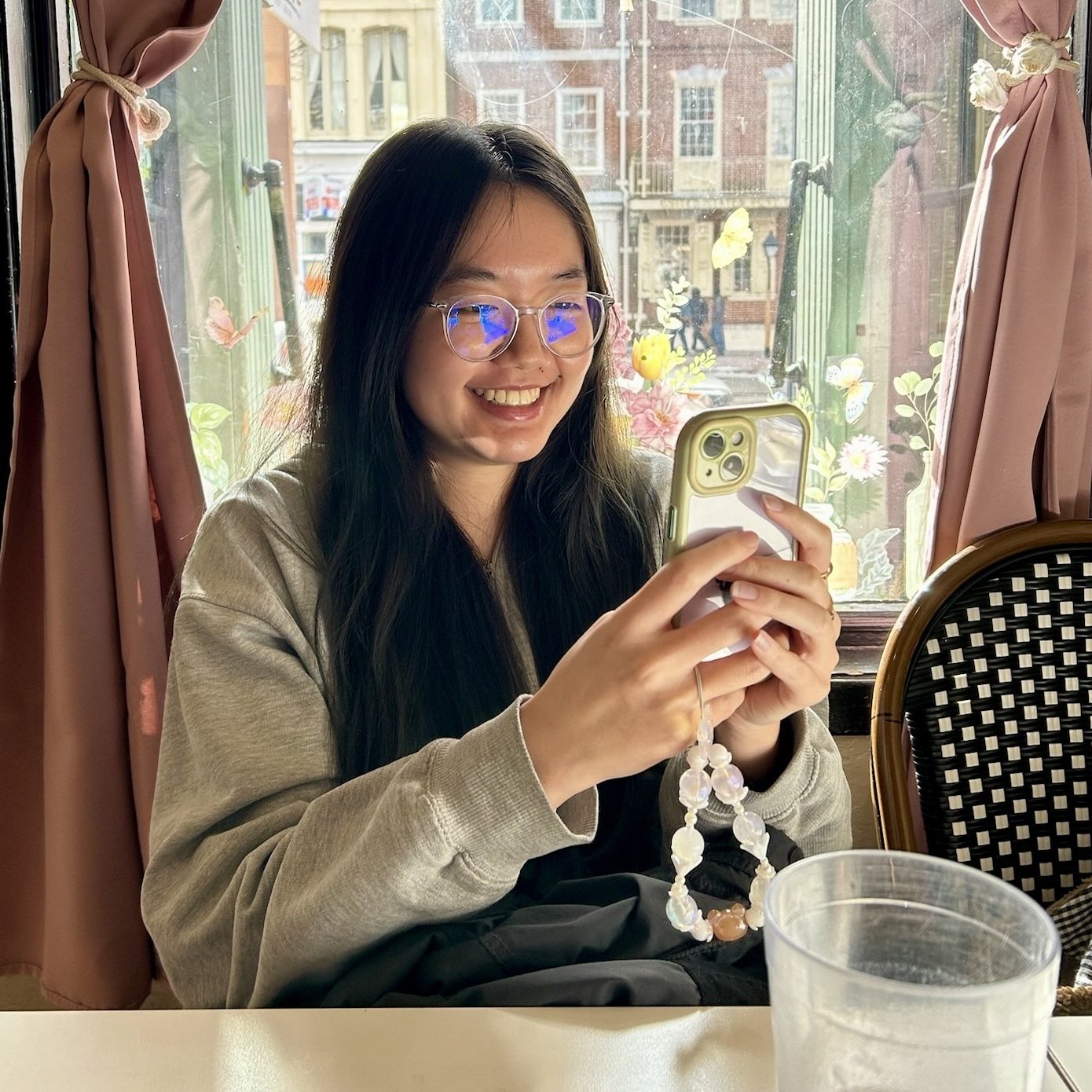
This painting depicts the Lunar New Year tradition of a family hotpot dinner. My family takes out the yin yang pot during special occasions. The view from inside, past the red lantern decorations and across fogged windows blurred with condensation, separates the warmth of celebrations from the winter cold outside.
Image credit: Artist
Yuan-yuan Wang
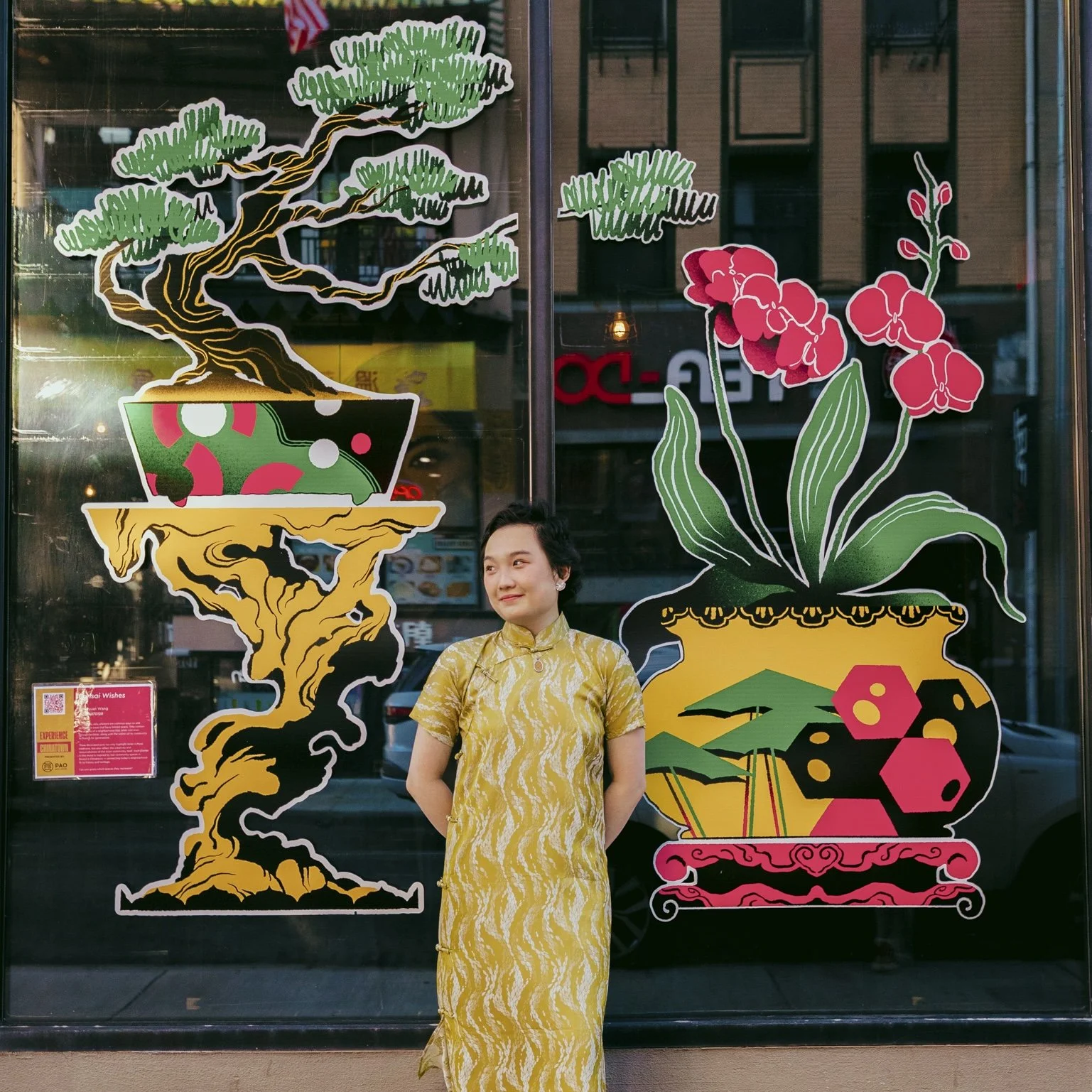
Yuan-yuan Wang is a Taiwanese artist based in Boston. Her work varies from digital art to watercolor and more.
She enjoys working with colors, textures, and layers. Her art is a mix of authenticity, layers, and a dash of whimsy.
This artwork is inspired by tri-color glazed ceramic during the Tang dynasty. The use of watercolor and color pencils mimic the ceramic glazed quality of fluidity and texture. Horses have always been a popular subject that symbolizes stability, status, wealth, and future prosperity.
Image credit: Mel Taing
Jenny Xin Wen (文馨)
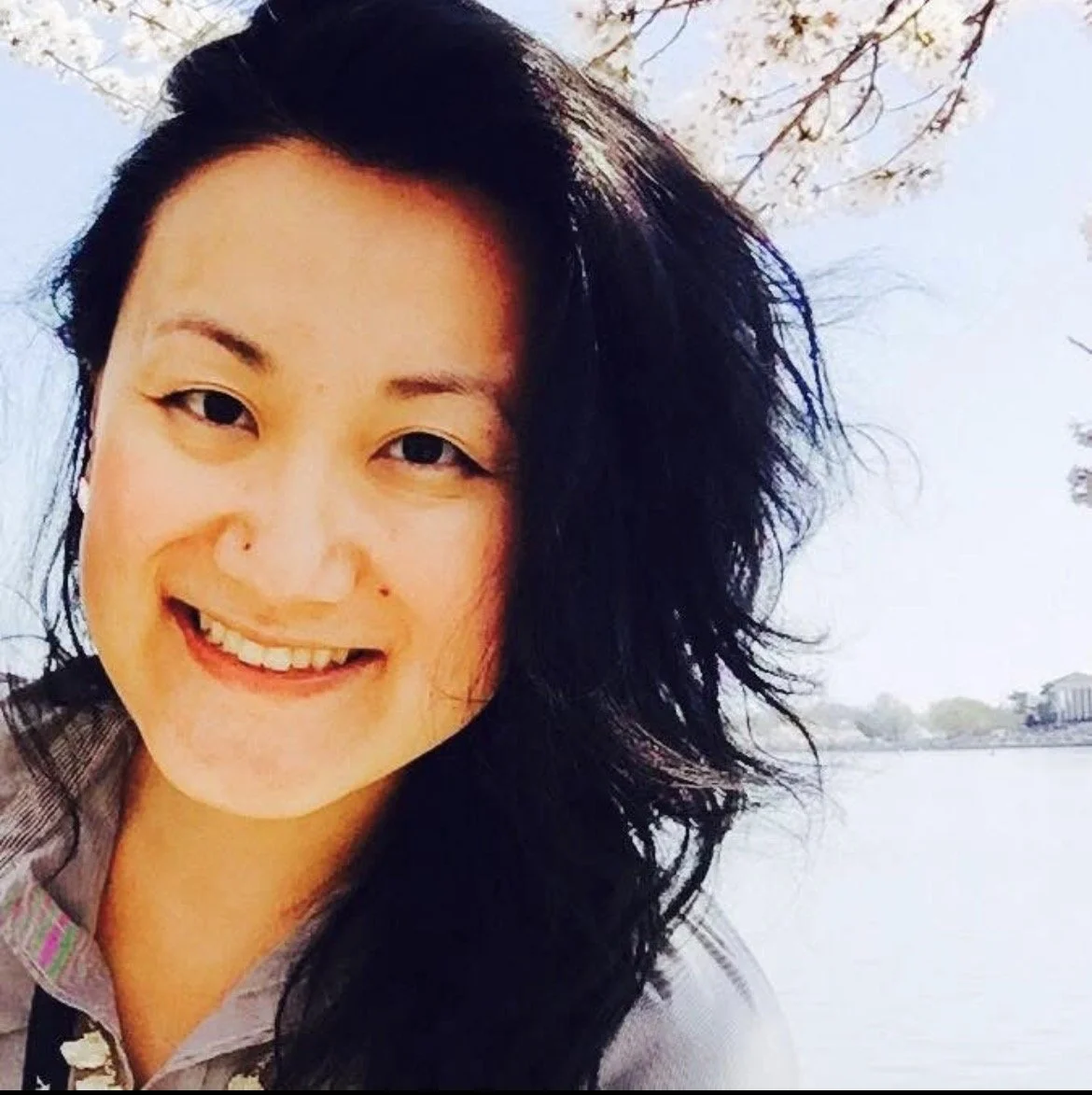
I liken my multimedia art practice to an octopus—many-limbed, curious, improvisational—playing with color, intuition, and a rich Chinese heritage.
After moving from Beijing to the US at age eight, Lunar New Year and other Chinese traditions mainly lived in fragments of memory. A solo journey to my ancestral village in Shanxi in my 20s rekindled my love for Chinese culture, history, and a sense of belonging, letting me connect to my heritage on my own terms.
Through art, I dive into my lineage, identity, and the Chinese diaspora collective subconscious—my main wells of joy, connection, and healing.
Image credit: Artist
Lucy Yan
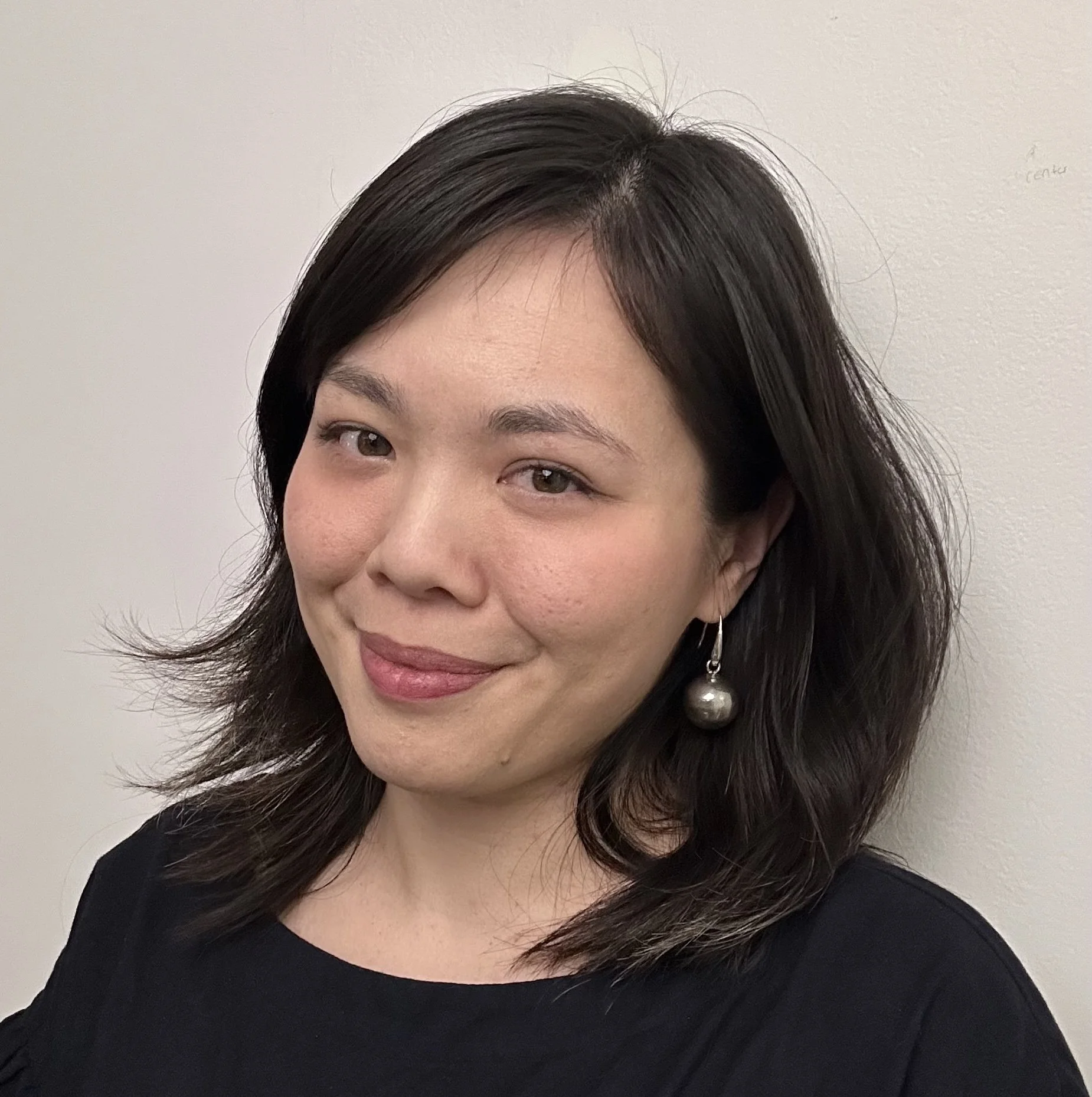
Lucy Yan switched careers from engineering to oil painting following the death of her artist grandfather (爷爷). Engaging realism and impressionism, she reveals intimate contemplations with viewers: grief, queer love, introspection… “Lucy’s work has soul,” an observer once said. Through still life and portraiture, she invites you to contemplate sources of inspiration alongside her.
Lucy’s formal training comes from the Realist Academy of Art Boston. After serving as Board President for two years at non-profit Gallery 263, she is a current Emerging Artist Member at the Copley Society of Art and an Exhibiting Artist Member at the Providence Art Club.
Image credit: Artist
Christina Yee
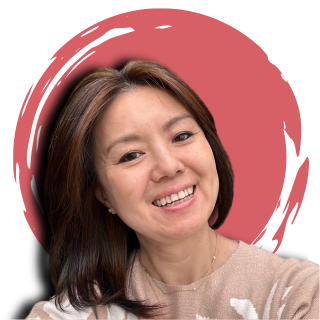
Christina Yee is a Chinese American artist based in the Greater Boston area whose work explores nature and lived experience through abstract realism. Using watercolor, colored pencil, and mixed media, she builds layered compositions that merge careful detail with atmosphere and subtle narrative. Her paintings reflect a balance of structure and openness, realism and interpretation.
"Fortune in Motion" draws from the Lunar New Year traditions in which firecrackers are used to drive away evil spirits and bad luck while clearing the way for joy, prosperity and renewal for the new year. The horse, the zodiac symbol of the new year, represents strength, endurance and forward momentum. Emerging through the smoke, the horse embodies the arrival of the new year that is defined by promise of prosperity and bold intention.
Image credit: Artist
Catherine Zhao
Catherine Zhao is from Newton, MA, and started working at Gateway Arts in 2022. Zhao works with a variety of drawing and painting mediums. Her work has a controlled, graphic quality to it and demonstrates an appreciation of balance and symmetry.
Vinfen’s Gateway Arts is an internationally acclaimed studio art center, store, and gallery providing professional supports and representation to adult artists with disabilities. Catherine Zhao is one of nearly 100 artists supported by Gateway Arts.