Registration coming soon.
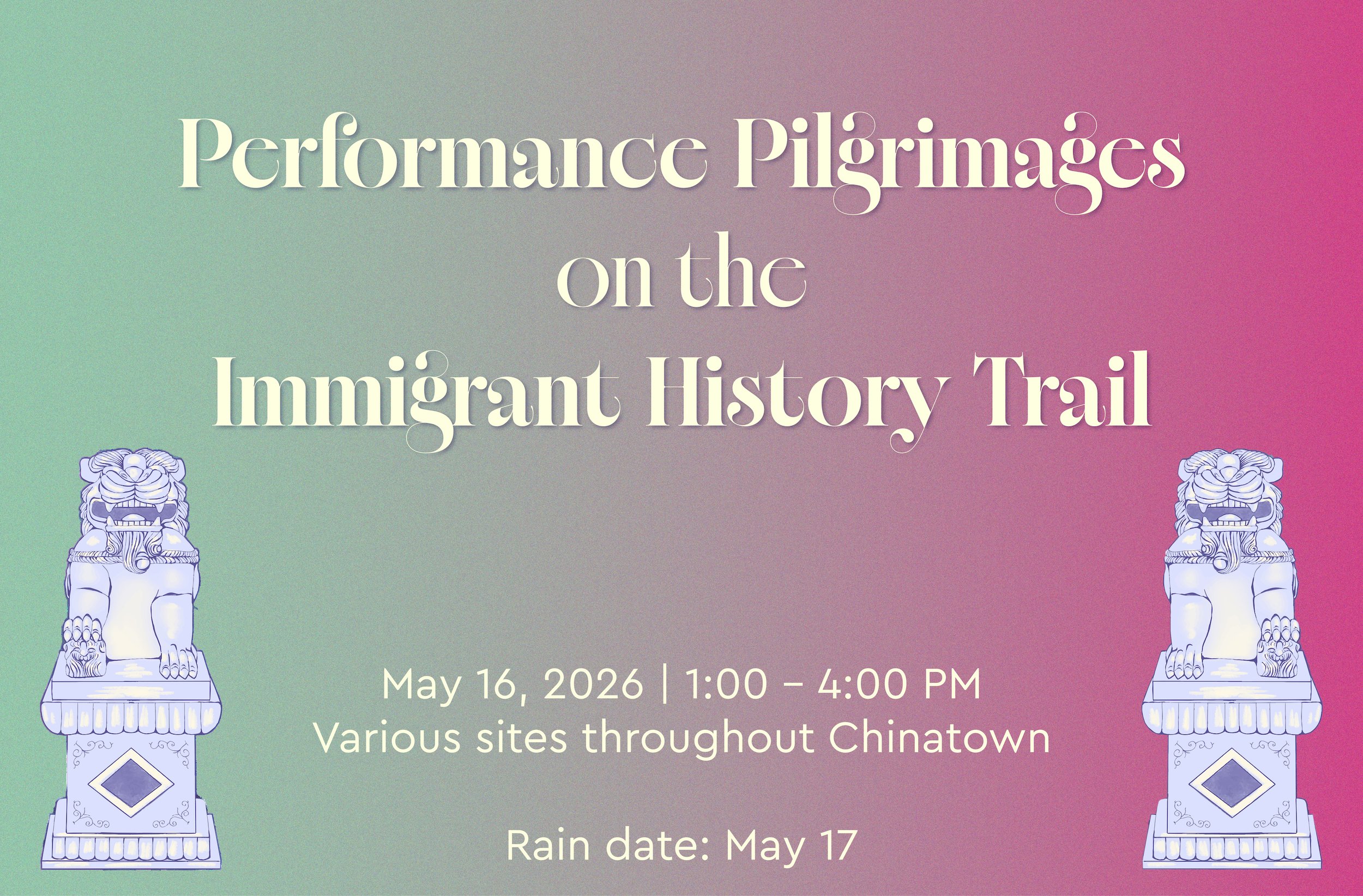
In this public program, we invite you to experience Boston Chinatown’s streets and corners as memory archives activated through live performances. In collaboration with the Immigrant History Trail, six artists will be responding to and caring for site-specific histories of Boston Chinatown through water calligraphy, dance, storytelling, and more. Participants will start their journeys at Pao Arts Center where they will be given a map and a schedule to walk around Chinatown and visit the performances. We invite you to find refuge and meditate on the deep histories embedded in the neighborhood.
Performing Artists
Yolanda He Yang
Yolanda He Yang is an installation and performance artist whose practice engages labor, materiality, and social ecology through subtle and ephemeral gestures. Born and raised in a Catholic family in North China and shaped by frequent relocations in childhood, her work draws from lived experience and site-responsive research. Through residencies and projects, her practice has attuned to the material and social conditions of diverse environments, including prehistoric sites in Cairo and Luxor, a demolition and construction recycling site at RAIR (PA), cornfields at Villkulla Residency (NE), and an upcoming residency at the Marble House Project (VT). As a recently awarded 2025 MassCreative fellow, she continues to lead Behind VA Shadows, a community public art project amplifying the creative voices of frontline staff in nonprofit art museums and organizations.
Ying Ye (叶荧)
Ying Ye (叶荧) is a bilingual, Fuzhou-born interdisciplinary and socially engaged Chinese immigrant artist whose work weaves her family’s cooking and farming traditions into site-responsive and community-based practices. Her work explores cultural identity, migration, feminism, and Asian American experiences, while addressing urban development, racial equity, and economic and food justice through art and labor. She was a selected public artist for the 2024 Un-Monument Public Art & Performance Initiative in Boston, an Artists of Color Accelerate Fellow with the New Britain Museum of American Art, and a 2024–2025 Trinity Studio Art Fellow. Ye has exhibited widely across New England and completed residencies at Mildred’s Lane, the Alternative Art School, and the Farmington Valley Arts Center.
Lani Asunción
Lani Asunción (they/them) is a Boston based queer Filipinx interdisciplinary artist who explores the intricacies of identity and belonging with ritualized performance and public art that serve as acts of reclamation. In their work, they seek to create public spaces where alternative ethics of care, community healing, and social solidarity can thrive. Asunción was the Curator & Public Art Manager of Pao Arts Center’s 2024-2025 Un-Monument Public Art & Performance Initiative in partnership with the City of Boston Mayor’s Office of Arts & Culture, supported by the Mellon Foundation. They are a 2025 WBUR Maker and Isabella Stewart Gardner Museum 2026 Neighborhood Salon Luminary. Asunción is a 2025-2026 Hidden Histories Artist-in-Resident in collaboration with Joanna Tam supported by The Reckonings Project focusing on Chinatown histories from the NEU Special Collections Archive.
Joanna Tam
Joanna Tam is a Hong Kong-born visual artist who lives and works on the ancestral and unceded lands of the Wampanoag, the Nipmuc, and the Massachusett People, also known as Boston. Her practice examines migration, the idea of safety, and one's connection to places through video, photography, performance, installation, and community engagement. Tam is the recipient of the Prilla Smith Brackett Award (presented by the Davis Museum), the Collective Futures Fund's Sustaining Practice Grant, and the SMFA Traveling Fellowship. Tam's work has been exhibited nationally and internationally. Selected solo exhibitions include American Studies 2019 at the Center for American Political Studies, Harvard University; Visibility Studies at Regis College Fine Arts Center; Wasenstraße Story at Chrom VI in Idar-Oberstein, Germany; She has been invited to attend artist residencies at the Center for Photography at Woodstock, Kala Art Institute, the Vermont Studio Center, and the Boston Center for the Arts, among others.
Feda Eid
Feda Eid is a Lebanese diaspora visual and performance artist living in the occupied lands of Wampanoag and Massachusett People, so-called Quincy, MA. Her work explores the expression of heritage, culture, identity and often tense but beautiful space between, what is said, what is felt, and what is lost in translation. Using the everyday, passed down and reimagined as portals to ancestral wisdom and the Sacred, she captures these emotions through her bold use of color, textiles, adornment and pop culture linking the past and present. Feda is guided by her family's journey as Lebanese immigrants who fled the country's civil war in 1982 and her childhood growing up as an Arab and Muslim in the US.
Anita Yip
Anita Yip is a citizen artist, cultural strategist, and community builder. She makes work where art, memory, and collective power meet—through photography, writing, public programs and experiences that invite people to engage with history, place, and one another. Under the moniker Project Asian Joy, Anita brings overlooked stories to life, transforming them into shared spaces for reflection, connection, and action. She sees as civic infrastructure: a way communities remember who they are, imagine who they can become, and invest in the people and spaces around them. Recognized as a Ten Outstanding Young Leader by the Greater Boston Chamber of Commerce and a Recent Outstanding Graduate of Boston Latin School, Anita also speaks widely about community, resilience, and the power of creativity to activate change. Her work invites audiences not just to witness culture, but to help shape it.
About the Immigrant History Trail
The Immigrant History Trail is a multimedia public art project that activates Boston Chinatown's community archives to share stories about the neighborhood's working class immigrant histories. The Trail engages local community members to collaborate as advisors and participants by contributing stories and memories, selecting sites for the Trail, creating archival resources, and more.
Learn more about the Immigrant History Trail.
About the Curators
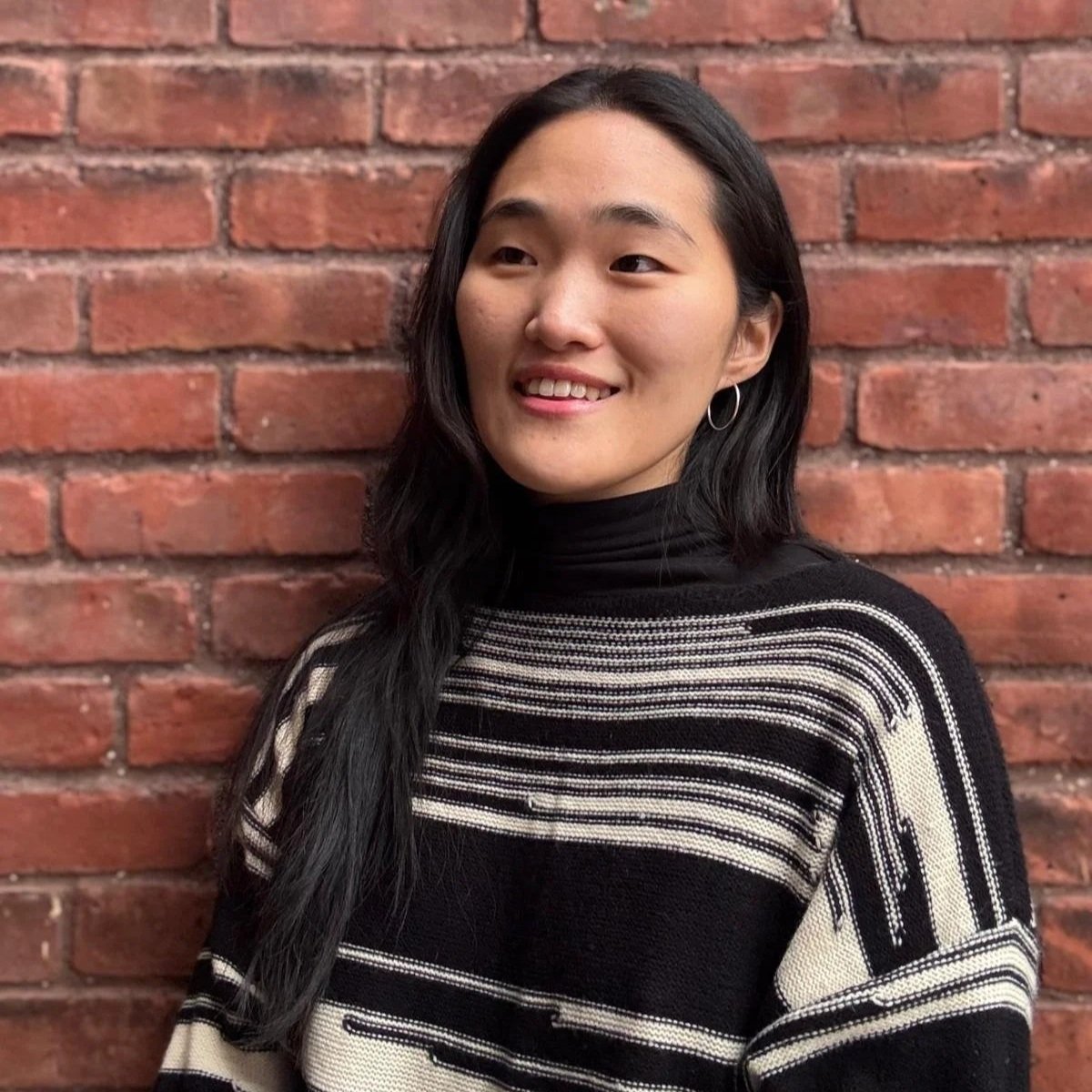
Sung-Min Kim (she/her)
Sung-Min Kim is a scholar and curator based in Boston, MA. Her research examines Asian diasporic air travel as a metaphorical and material experience of untethering, belonging, grief, and futurity. Sung-Min has worked in Boston Chinatown in various community organizations and public art projects as a project manager, researcher, and youth worker. Her curatorial practice is centered around cultivating spaces for gathering and dialogue on pertinent issues of Asian American subjectivity, politics, and community. Sung-Min is currently pursuing a PhD in Performance Studies at Tufts University.
Photo credit: Sung-Min Kim
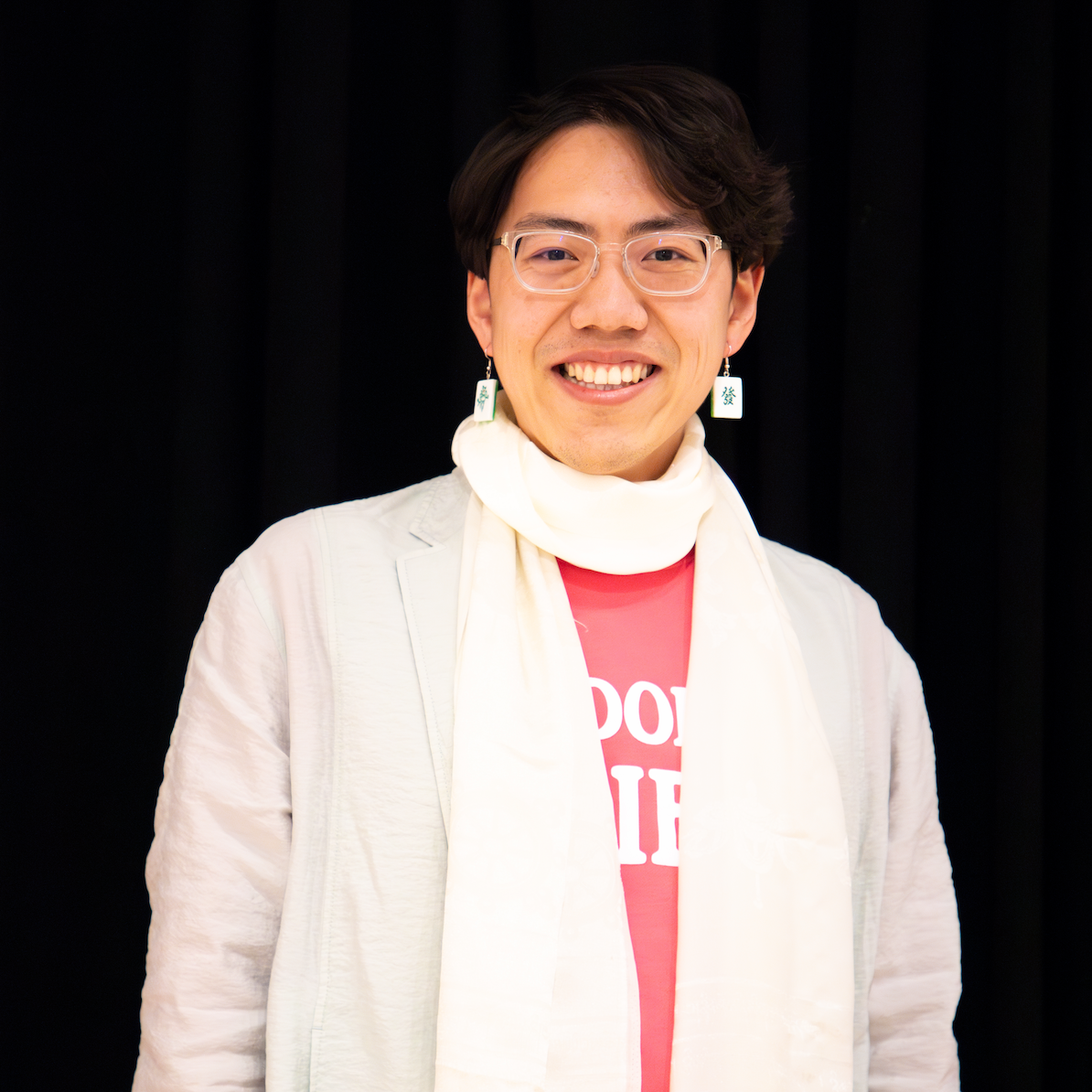
Wenxuan Xue (they/any)
Wenxuan Xue is a Boston-based theater and performance artist, curator, and educator. Their artistic practice is guided by grief work that disorients conditions of compulsory forgetting—of ancestral and spiritual lineages, queer kinships, and abundant relations to the earth.
Photo credit: Cat Lent
Related Programming
Temple of Our Ancestral Dreams
On view April 8 - June 19, 2026
Temple of Our Ancestral Dreams remembers and honors those who have come before us—blood, chosen, and place-based ancestors, those who have dreamed of our existence today. This multi-disciplinary exhibit activates Chinatown as a memory archive, a diasporic temple, a space for spiritual, ancestral, and communal refuge.
Ancestors of Chinatown: A Day for Remembering and Dreaming
Saturday, April 11 | 2:00 – 5:00 PM
Join us in opening the new exhibition with a collective ceremony that remembers and honors Boston Chinatown’s earliest group of immigrants who faced exclusions and neglect in Mount Hope Cemetery. We will tend to their stories, memories, and lineages through rituals while reflecting on our personal, collective hopes, and dreams.
Supported By
Temple of Our Ancestral Dreams and its public programming are supported by the New England Foundation for the Arts' Public Art for Spatial Justice program, with funding from the Barr Foundation and the Fund for the Arts at NEFA.